


AI Opportunity Audits are transforming how businesses approach growth and innovation. They help identify where AI can be most effective.
These audits are crucial for evaluating AI's potential impact on business processes. They guide companies in finding the best AI integration points.
By conducting AI evaluations, businesses can streamline operations and reduce costs. They also improve decision-making and uncover new revenue streams.
Opportunity identification is key to leveraging AI for business transformation. It involves assessing current operations to find AI integration opportunities.
Understanding AI's limitations and risks is essential. This ensures effective opportunity identification and successful AI implementation.

What Are AI Opportunity Audits?
AI Opportunity Audits systematically review organizational processes to find potential AI applications. These audits identify where AI can drive the most value.
They involve analyzing existing operations to locate AI integration points. The goal is to enhance efficiency and decision-making capabilities.
An AI Opportunity Audit typically includes several key components:
- Evaluation of Business Needs: Understanding where AI can offer the most benefits.
- Data Assessment: Ensuring data quality and availability for AI solutions.
- Technology Review: Analyzing current tech to gauge readiness for AI.
These audits provide actionable insights on AI's role in the organization. They assist in aligning AI initiatives with strategic business goals.
By performing regular AI Opportunity Audits, businesses can stay ahead. They can continuously adapt and refine their AI strategies.
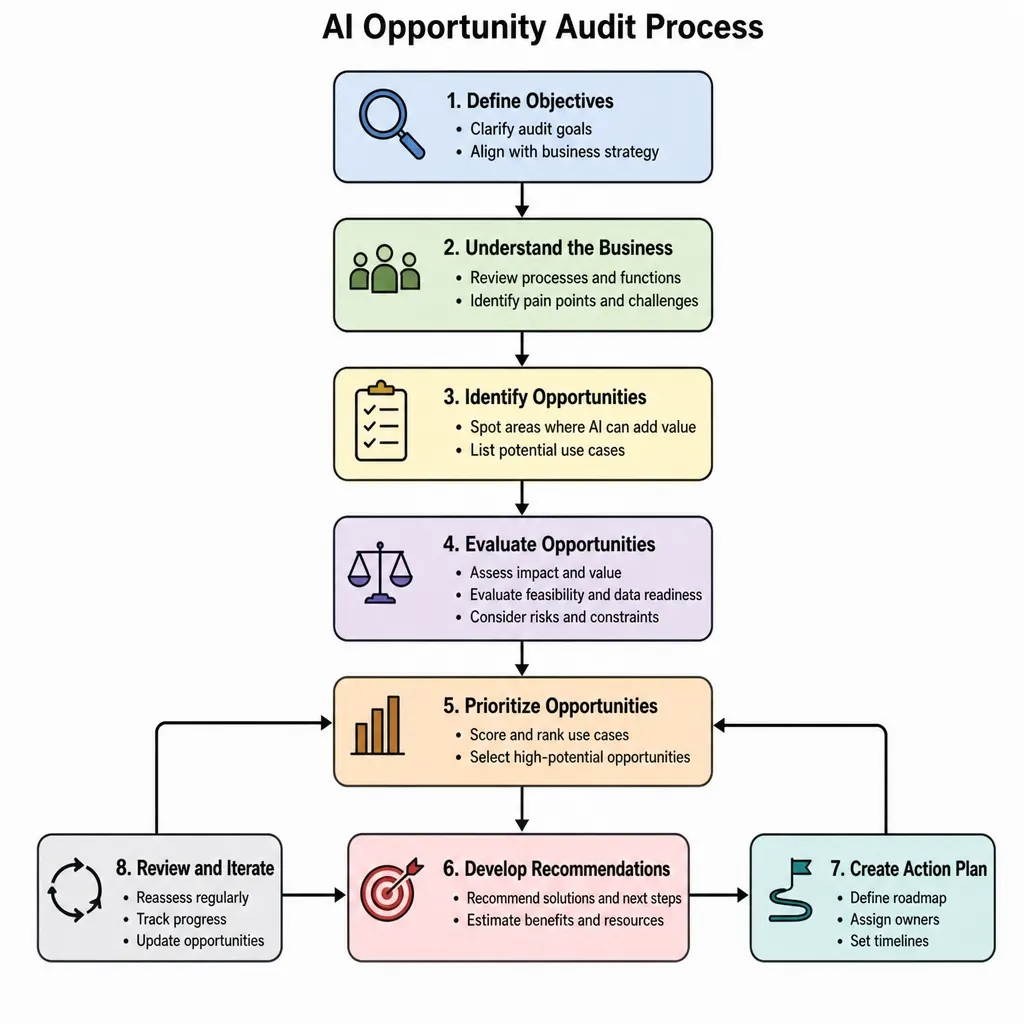
Why AI Evaluation Matters for Businesses
AI evaluation plays a crucial role in maximizing the value of AI technologies. It helps businesses understand the impact of AI on their processes and strategies.
The benefits of an AI evaluation include:
- Identifying Potential Gains: Revealing hidden efficiencies and new revenue streams.
- Assessing Risks: Understanding limitations and mitigating potential challenges.
- Aligning Goals: Ensuring AI projects align with strategic objectives.
Without a thorough evaluation, businesses might overlook key opportunities. This can lead to missed chances for growth or improvement.
Conducting regular AI evaluations ensures that AI initiatives remain relevant. It enables organizations to adapt to new innovations and market shifts. In an ever-evolving digital landscape, this adaptability is vital for staying competitive.
The Process of Opportunity Identification
Opportunity identification is a critical step in leveraging AI effectively. It involves assessing existing operations to find areas where AI can bring the most value.
This process requires a detailed look at business processes. Organizations need to map out workflows to identify inefficiencies and pain points. By doing so, they can see where AI could streamline tasks or enhance outcomes.
Opportunity identification includes several key actions:
- Analyzing Current Operations: Examining processes to spot inefficiencies.
- Evaluating Data Readiness: Checking if data is suitable for AI applications.
- Prioritizing Potential Projects: Ranking AI projects based on expected ROI.

Aligning potential AI initiatives with business goals is essential. This ensures that AI projects contribute positively to strategic objectives. It helps teams to focus on areas with the highest potential impact.
Businesses should see opportunity identification as an ongoing effort. As AI technologies evolve, continuous assessment is vital. It allows companies to capture new opportunities and enhance their competitive edge.
Key Steps in Conducting an AI Opportunity Audit
An AI Opportunity Audit is a structured approach to maximize AI benefits. It begins with setting clear objectives. These objectives should align with the organization’s overall strategic goals.
Next, gather a multidisciplinary team. This team should include IT experts, business analysts, and stakeholders. Their diverse perspectives ensure a comprehensive evaluation of AI opportunities.
The core of the audit involves detailed data analysis. Examine the organization's data to determine its quality, relevance, and volume. High-quality data is crucial for effective AI deployment.
Key steps in an AI Opportunity Audit include:
- Defining Objectives: Outlining clear, measurable goals.
- Assembling the Team: Bringing together varied expertise.
- Conducting Data Analysis: Evaluating data readiness and quality.
- Identifying AI Solutions: Matching AI tools to identified opportunities.
- Evaluating Technology Infrastructure: Assessing the current tech landscape for compatibility.
Throughout the audit, maintain open communication. Transparency helps align team efforts and integrates insights from various departments. This collaborative approach leads to a more reliable AI strategy, boosting the chances of successful implementation.
Common Areas for AI Implementation
AI can transform various facets of a business. Identifying the right areas ensures optimal benefits. Many companies start with customer service enhancements.
AI-driven chatbots provide instant support. They reduce wait times and improve user satisfaction. Another promising area is marketing. AI enables targeted campaigns based on rich data insights.
Businesses also explore AI in supply chain management. AI can predict demand trends, optimize inventory, and enhance logistics. This reduces costs and boosts efficiency.
Common areas for AI implementation include:
- Customer Service: Implementing AI-driven chat support.
- Marketing: Utilizing data analytics for targeted campaigns.
- Supply Chain: Optimizing inventory with predictive analytics.
By focusing on these areas, organizations can achieve quicker wins. It allows them to enhance operations and improve their strategic decision-making processes.
Challenges and Considerations in AI Audits
Conducting AI Opportunity Audits presents unique challenges. One major hurdle is data readiness. Businesses must ensure they have quality data for AI to process.
Moreover, understanding AI's limitations is crucial. Overestimating AI's capabilities can lead to unexpected setbacks. It's essential to maintain realistic expectations of what AI can achieve.
Organizations must also consider ethical implications. AI implementations should be aligned with both ethical standards and regulatory requirements. Failure to do so can lead to reputational damage.
Considerations during AI audits include:
- Data Quality: Ensuring robust and clean datasets.
- AI Limitations: Recognizing what AI can and cannot do.
- Ethical Standards: Aligning AI with ethical guidelines.
Carefully evaluating these factors can mitigate risks. It enhances the likelihood of successful AI integration and sustainable business growth.
Maximizing Value: Best Practices for AI Opportunity Audits
Maximizing the impact of AI Opportunity Audits involves strategic planning. Businesses should focus on aligning audits with their goals. This ensures that AI initiatives bring tangible benefits.
To extract the most value, consider these practices:
- Set Clear Objectives: Define the purpose of AI audits.
- Involve Key Stakeholders: Engage various departments for comprehensive insights.
- Continuous Monitoring: Regularly update audits as technologies evolve.
Applying these strategies ensures that AI investments yield optimal returns. It also keeps organizations on track with evolving market demands.
Conclusion: Turning Insights into Action
AI Opportunity Audits provide valuable insights for businesses. These insights must be transformed into actionable strategies to drive growth. Simply knowing where AI fits isn't enough; action is crucial.
Integrating AI into operations requires commitment and planning. Organizations that harness the findings from AI audits position themselves for success. With clarity and foresight, businesses can make significant strides towards enhanced efficiency and innovation.
